Naveen Srikantaiah

Food plays an important role in children’s health development

Food and nutrition are an integral part of a child’s development. Due to their active routine and demeanor, they require energy-giving foods to maintain it. Proteins are also necessary to continuously advance their physical and mental enhancement, and fruits and vegetables are needed to protect them against harmful diseases and disorders. An adequate consumption of water is also prompted in children so that they can have a healthy growing process.

Due to the strong link between nutrition and growth and development, both physically and intellectually, we cannot afford for children to lack an adequate process of nutrition consumption, let alone an unhealthy one. Nutritional requirements for children must be higher in both quality and quantity than for adults. A healthy and balanced diet ensures the development of fundamental mental skills including memory, focus, and cognitive thinking and significantly enhances a child’s health and academic achievement in later years.

A disparity between the nutrition required and nutrition gotten can lead to growth mismatch. Undernutrition or overnutrition leads to severe illnesses like meningitis and chronic diseases like diabetes, cancers, and cardiac issues, because their immunity gets deprived. It can also lead to a decrease in the child’s daily activities, social life, thinking and behavioural abilities. A child’s brain grows at a rapid pace and nutrition plays an especially important role in helping them think and read.

To ensure that the children who are less fortunate than others do not go without the food they need, we should make a conscientious effort. Due to poor nutrition, less fortunate children lose their right to emotional, physical, and social development and are more prone to experience depression and low self-esteem. 89% of Indian children between the ages of six and 23 months (about 2 years) DO NOT receive a sufficient nutrition. Due to their poverty, lack of money, and lack of knowledge, they are deprived of nutritional care, which leaves them susceptible to malnutrition. Several non-governmental organisations are striving to end hunger, but their chances of success are exceedingly slim. The basic explanation is that not enough people were involved. Without the active participation of individuals, hunger cannot be eliminated. Everyone must work together to alleviate the situation of disadvantaged children since there is no doubting that more helping hands may readily share the burden.

Sponsor a meal today.

Author/Volunteer

Pakhi Sinha

Education can change lives of underprivileged children

“Education is a passport to the future.”

Before I delve deep into the importance of education for underprivileged children, let us understand what the term education means. The practice of teaching and learning at educational institutions or environments, or the propagation of society’s values and store of knowledge is known as education. Children need the right kind of education to develop culture and social manners.

Their ultimate role in society is meant to be guided by education, which is aimed at assisting them to acquire a culture, shape and mould their behaviour in the ways of adulthood. It does not necessarily have to have a bunch of students being taught by a teacher on a table and chair with prescribed course books and notebooks. In the most primitive cultures, there is often little formal learning—nothing of what one would typically refer to as school, courses, or teachers. Instead, every activity and every aspect of the environment are usually seen as courses and schools, and most or all adults take on the role of teachers.

Kritagyata Trust

However, as societies become more complex, the amount of knowledge that needs to be passed down to the following generation exceeds what any one person can know, requiring the development of more efficient and selective systems of cultural transmission. This is why a formal setting like a teacher and a classroom with textbooks has become an ideal setting for learning.The progeny of well-off families can acquire good education because of their financial situation, which results in them becoming better global citizens than the financially impoverished ones. They should not be deprived of their right to education only because their parents and guardians are not able to have the funds for it.

Who are the less privileged children? They are those who are not lucky enough to enjoy the basic amenities of life like food, water, shelter and learning facilities as the privileged ones. They stand at the lower steps of the economy; thus, they do not have proper educational provisions like normal students. But that does not mean that they should be blamed for not being able to stand up for themselves and steer through life.As they develop the necessary abilities to support themselves and make wise decisions, every kid should have access to a high-quality education. Compared to someone who did not acquire any formal education, an educated person is better able to deal with challenges and contribute to the development of society.

Children who receive a high-quality education can reach their full potential and become financially independent. In order to achieve social justice and end poverty, education is essential. For poor children to acquire abilities like critical thinking, effective communication, creativity, and imagination, education is crucial.

It is essential for obtaining better-paying jobs, advancing gender equality, and building an inclusive society for the less fortunate. Social problems like child labour, child marriage, and dowry can be eliminated by proper education at the right age. It is an effective method for removing generational poverty. Excellent health, nutrition, and hygiene education can significantly lower deaths that could have been avoided.

Therefore, underprivileged children should be provided with free education. Privilege should not be the requirement for learning, so that they can rise from lower standards and strive for a life of better quality.

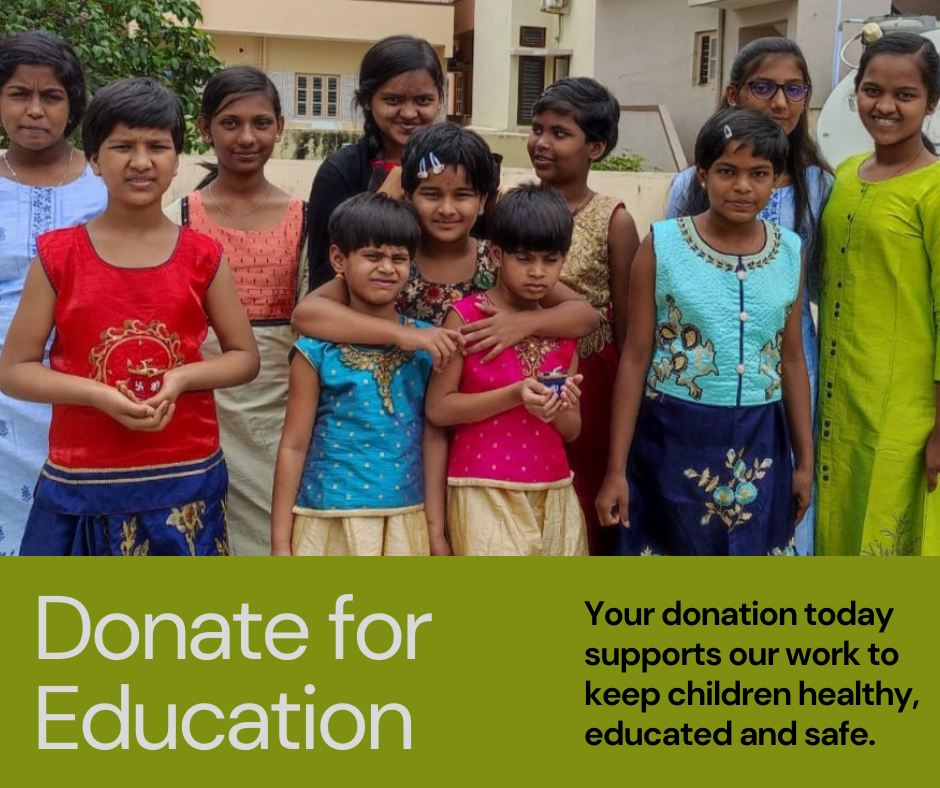
Support Kritagyata Trust to help such underprivileged children in bangalore to get access to quality education and food.

Donate online today to support education


Pakhi Sinha

Volunteer

Don't just leave yet!

All children deserve to live in safe, nurturing homes
where they can feel valued and loved.

Get 50% tax exemption on your donation to Kritagyata under section 80G of the Income Tax Act.