Naveen Srikantaiah

Why should you donate to Kritagyata Trust

In a world where education holds the key to unlocking myriad opportunities, not every child is privileged with access to this fundamental right. Amidst the challenges, organizations like Kritagyata Trust strive to narrow the gap and pave the way for a brighter future for underprivileged children. But what makes donating to Kritagyata Trust a worthy endeavor? Let’s delve into the impactful journey of this trust and explore compelling reasons behind supporting their cause.
 

Education as a Catalyst for Transformation     

Kritagyata Trust recognizes education as a potent force capable of transforming lives. By contributing to this trust, you become a catalyst for change, enabling children to break free from the cycle of poverty and lay the groundwork for a better future.

A Dedication to Every Child’s Right to Learn

The trust is steadfast in its commitment to ensuring that every child, irrespective of their background, has the right to quality education. Your donation becomes a beacon of hope for those who might otherwise remain in the shadows of illiteracy.

Empowering Girls Through Education

Kritagyata Trust acknowledges the significance of empowering girls through education. Your support directly contributes to dismantling gender barriers and fostering equality, nurturing a generation of empowered and educated women.

Transparent and Impactful Initiatives

A key reason to choose Kritagyata Trust lies in its transparent and impactful initiatives. The trust takes pride in its commitment to accountability, ensuring that your donations directly contribute to tangible, life-changing projects.

Community-Centric Approach

Kritagyata Trust adopts a community-centric approach, actively involving and engaging with local communities to discern their unique needs. This ensures that initiatives are tailored to address specific challenges and make a lasting impact.

Making a Global Impact Locally

While Kritagyata Trust operates locally, its impact is global. Supporting this trust means becoming part of a larger movement towards a world where education is not a privilege but a right for every child.

Corporate Social Responsibility (CSR) that Matters

For businesses seeking to make a meaningful impact through CSR initiatives, Kritagyata Trust provides a channel for investing in the future. Corporate support can create a positive ripple effect, benefiting both the community and the company’s social responsibility goals.

Volunteering for Lasting Impact

Beyond financial contributions, Kritagyata Trust encourages volunteering. Your time and skills can make a lasting impact on the lives of these children, further enriching their educational experience and fostering a sense of community support.

In the quest to build a more equitable and educated society, your contribution to Kritagyata Trust is more than a donation; it’s an investment in the future. Every rupee, dollar, or euro donated and every hour volunteered has the potential to change lives, break barriers, and construct a brighter tomorrow. Join the movement, and together, let’s make education a reality for every child through Kritagyata Trust.

 

How can non profits leverage technology to maximize their impact

In today’s digital age, non-profit organizations have an incredible opportunity to leverage technology to expand their reach, improve their operations, and ultimately maximize their impact. From raising funds to enhancing transparency and increasing efficiency, technology can play a vital role in helping non-profits achieve their mission. In this blog post, we’ll explore some key ways in which non-profits can harness the power of technology to make a difference in the world.
  • Online Fundraising Platforms: Embracing online fundraising platforms and crowdfunding websites can help non-profits tap into a global donor base. These platforms make it easy for supporters to contribute to a cause, while also providing a secure and transparent way to manage funds. With the right strategy, non-profits can significantly increase their fundraising efforts.
  • Social Media and Digital Marketing: Non-profits can utilize social media and digital marketing to spread awareness about their mission, engage with their community, and attract potential donors and volunteers. Creating compelling content, sharing success stories, and running targeted campaigns can be powerful tools in the non-profit toolbox.
  • Data Analytics: Data is a non-profit’s secret weapon. Utilizing data analytics tools, non-profits can gain valuable insights into their operations, donor behavior, and impact. These insights can inform decision-making, helping organizations focus their efforts on areas that yield the greatest results.
  • Cloud-based Collaboration Tools: Collaborative tools like Google Workspace and Microsoft Teams can streamline communication and project management within non-profits. These tools enable teams to work together more efficiently, regardless of their physical location. This can lead to better coordination, reduced administrative overhead, and more resources directed towards the cause.
  • Mobile Apps and Websites: Creating user-friendly websites and mobile apps can improve accessibility and engagement. Non-profits can use these platforms to provide information, collect donations, and offer interactive features that connect supporters with their mission.
  • Volunteer Management Software: Technology can simplify the process of recruiting and managing volunteers. Specialized software can help match volunteerswith specific skills to the right projects, track their contributions, and show appreciation for their commitment.
  • Transparency and Accountability: Blockchain technology can enhance transparency by providing a secure and immutable record of financial transactions and activities. This level of accountability can build trust with donors and partners.
  • Virtual Events and Webinars: Non-profits can host virtual events, webinars, and conferences to engage a broader audience and share their knowledge and expertise. This can be a cost-effective way to spread awareness and educate the public.
  • Online Learning and Training: Leveraging e-learning platforms can help non-profits train their staff and volunteers more effectively, improving their capabilities and ultimately the quality of services provided.
  • Remote Health Services: In times of crisis, such as the COVID-19 pandemic, telehealth and remote healthcare services can help non-profits continue to provide vital support to their beneficiaries.

By embracing these technological advancements, non-profit organizations can adapt to the changing landscape and maximize their impact on the causes they champion. It’s important for non-profits to stay up-to-date with the latest tech trends and invest in the right tools and strategies that align with their mission and goals. Technology is a powerful ally in the pursuit of positive change, and non-profits should harness it to the fullest.

 To Support Kritagyata Trust Donate online today

A New Backpack Filled with Hope: Every Child Deserves a Seat in the Classroom

Imagine classrooms brimming with laughter, not empty chairs. Imagine tiny backpacks bursting with possibility, not worn-out burdens. Imagine a world where education, the key to a brighter future, isn’t locked behind a door of poverty.

This is the world your generosity can help create. With every donation, you become a bridge, paving the way for children to reach their full potential. You fill backpacks with textbooks, pencils, and the magic of hope. You send laughter marching into classrooms, replacing despair with dreams.

Think of countless children, eyes glistening with curiosity, yearning for a chance to learn. Every backpack you help provide becomes a shield against adversity, a beacon whispering, “You belong here.” This isn’t just about supplies, it’s about breaking the cycle of poverty, one educated life at a time. It’s about building a future where every child has the chance to shine.

But the journey doesn’t end with donations. Volunteers are the architects of this brighter future, the storytellers who bring textbooks to life, and the mentors who guide young minds. By sharing your time and skills, you become a pillar of support, a lighthouse in the storm.

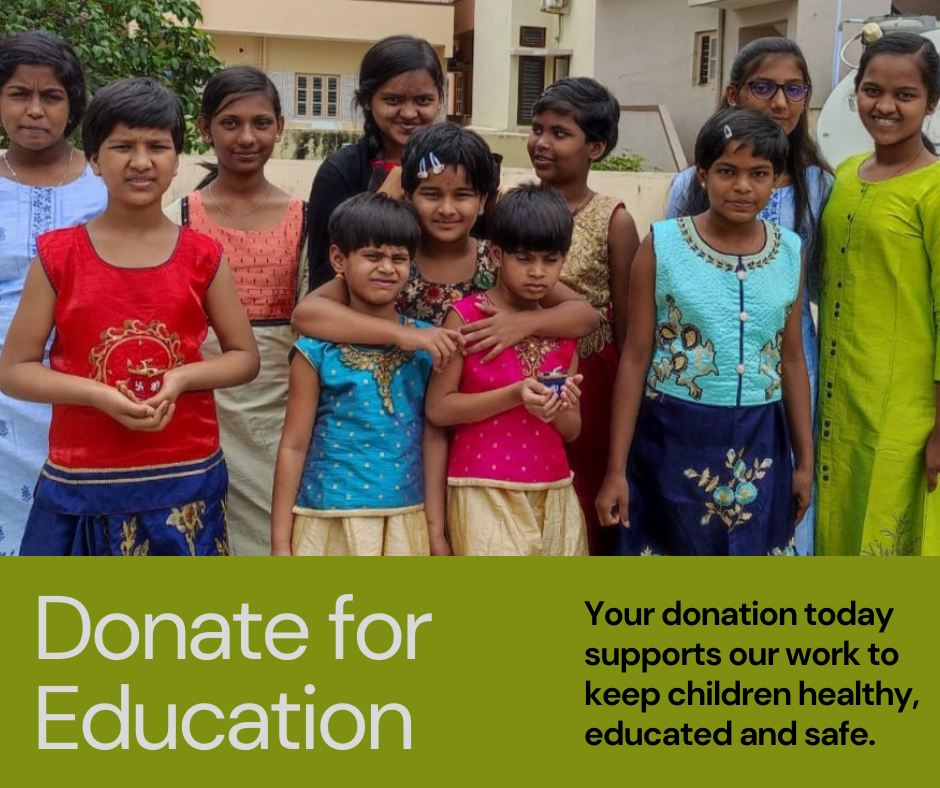
Donate for Education

Together, let’s rewrite the narrative. Every click, every rupee, every hour becomes a seed of hope. Let’s watch these seeds blossom into empowered individuals, shaping a brighter tomorrow.

Visit our website today and take action. Donate, volunteer, and be the change you wish to see in the world. Because in the fight for every child’s future, no act of kindness is too small.

Together, let’s fill classrooms with laughter, backpacks with possibility, and hearts with the unwavering belief that every child deserves a seat at the table of learning.

Remember, countless children await your action. Join us and be the catalyst for change.

Access to education is every child’s right

“Education is the key to unlock the golden door of freedom.”

Education has a significant impact on the quality of life of children. It broadens their knowledge, fosters their potential, and assists kids in being more sensitive and socially stronger. Education is the foundation for critical thinking and general human development. To ensure that all children in our country have access to the resources they need for regular and quality education, attendance at school, and completion of their education, we must focus on children’s education in India.

The Universal Declaration of Human Rights makes clear that every child has the right to a free basic education, so that poverty and lack of money should not be a barrier to schooling. Even in India, article 21-A in the Constitution of India to provide free and compulsory education of all children in the age group of six to fourteen years as a Fundamental Right in such a manner as the State may, by law, determine. A child’s right to education entails the right to learn.

Donate for Education

Despite this fundamental global human right, children, particularly those from low socioeconomic backgrounds, are denied the basic right to education for a variety of reasons, including a lack of education funding in developing countries, a lack of educators, a lack of classrooms, a lack of learning materials, the exclusion of children with disabilities, living in a country in a war-related conflict, and the cost of education. One of the primary factors of inaccessibility to education is gender. When girls lack access to safe restrooms, they are frequently harassed or abused while seeking a private place to go. Girls may also miss or drop out of school when they begin menstruating if they do not have access to sanitation or sanitary items.

Therefore, we as global citizens should spread awareness and make collective efforts to ensure that no child is left out in the race of education. They need our help to learn, so that they can grow up to be modern future citizens of the earth, be aware and teach their own children about the eternal importance of education.

To support education of less privileged children donate now

How volunteers can help NGO’s

The programs in society, it strives to strengthen policies and enhance the work pattern.

Have you ever considered best way to find yourself is to lose yourself in the service of others. — Mahatma Gandhi

Before I dive into convincing you to volunteer in an NGO, let me explain what it actually is. An NGO is a non-governmental organization that supports voluntary social services and is not for profit. An NGO is committed to a specific objective, typically one that has to do with improving a particular community or contributing towards a social cause. Through the implementation of welfare and development volunteering? Several organizations profit from having volunteers’ assistance, and in some cases, they entirely rely on it. In addition to helping a cause they believe in; volunteers can obtain a real understanding of the circumstances and culture around the cause. They have the chance to interact with people from all backgrounds. It encourages students to learn about other cultures, develops their lateral thinking, and helps them become more mature and tolerant of other people’s behaviors because volunteering teaches you why others act the way they do.

Why should one volunteer in an NGO at all?  Most significantly, to enhance the quality of life for those who are less fortunate. Volunteering provides essential assistance to those in need while simultaneously influencing society in a positive way. We feel happy as we offer more. It is a means of contributing to society. By working as a volunteer for an NGO, you contribute your talents to the same effort to improve the world. It helps you become more sensitive to ongoing situations and teaches you humility since you can connect with others more easily and meet people from diverse backgrounds. It is a win-win situation since, in addition to helping an NGO reach out and improve the world, you also gain humility and acquire more effective communication techniques.

Kritagyata Trust, is one such NGO situated in Bangalore, that aims at the upliftment of women and children from various circumstances that limit their access to basic needs and collaborates with organizations for various educational initiatives. Their vision says: “To empower, engage and educate children and women from lower sections of the society, so that they are able to stand up for themselves and find their voice in a society that needs to be built on respect, dignity and equality for every individual, regardless of their gender, caste or class.”

By Volunteer

Pakhi Sinha

Food plays an important role in children’s health development

Food and nutrition are an integral part of a child’s development. Due to their active routine and demeanor, they require energy-giving foods to maintain it. Proteins are also necessary to continuously advance their physical and mental enhancement, and fruits and vegetables are needed to protect them against harmful diseases and disorders. An adequate consumption of water is also prompted in children so that they can have a healthy growing process.

Due to the strong link between nutrition and growth and development, both physically and intellectually, we cannot afford for children to lack an adequate process of nutrition consumption, let alone an unhealthy one. Nutritional requirements for children must be higher in both quality and quantity than for adults. A healthy and balanced diet ensures the development of fundamental mental skills including memory, focus, and cognitive thinking and significantly enhances a child’s health and academic achievement in later years.

A disparity between the nutrition required and nutrition gotten can lead to growth mismatch. Undernutrition or overnutrition leads to severe illnesses like meningitis and chronic diseases like diabetes, cancers, and cardiac issues, because their immunity gets deprived. It can also lead to a decrease in the child’s daily activities, social life, thinking and behavioural abilities. A child’s brain grows at a rapid pace and nutrition plays an especially important role in helping them think and read.

To ensure that the children who are less fortunate than others do not go without the food they need, we should make a conscientious effort. Due to poor nutrition, less fortunate children lose their right to emotional, physical, and social development and are more prone to experience depression and low self-esteem. 89% of Indian children between the ages of six and 23 months (about 2 years) DO NOT receive a sufficient nutrition. Due to their poverty, lack of money, and lack of knowledge, they are deprived of nutritional care, which leaves them susceptible to malnutrition. Several non-governmental organisations are striving to end hunger, but their chances of success are exceedingly slim. The basic explanation is that not enough people were involved. Without the active participation of individuals, hunger cannot be eliminated. Everyone must work together to alleviate the situation of disadvantaged children since there is no doubting that more helping hands may readily share the burden.

Sponsor a meal today.

Author/Volunteer

Pakhi Sinha

Don't just leave yet!

All children deserve to live in safe, nurturing homes
where they can feel valued and loved.

Get 50% tax exemption on your donation to Kritagyata under section 80G of the Income Tax Act.