NGO in bangalore

How can non profits leverage technology to maximize their impact

In today’s digital age, non-profit organizations have an incredible opportunity to leverage technology to expand their reach, improve their operations, and ultimately maximize their impact. From raising funds to enhancing transparency and increasing efficiency, technology can play a vital role in helping non-profits achieve their mission. In this blog post, we’ll explore some key ways in which non-profits can harness the power of technology to make a difference in the world.
  • Online Fundraising Platforms: Embracing online fundraising platforms and crowdfunding websites can help non-profits tap into a global donor base. These platforms make it easy for supporters to contribute to a cause, while also providing a secure and transparent way to manage funds. With the right strategy, non-profits can significantly increase their fundraising efforts.
  • Social Media and Digital Marketing: Non-profits can utilize social media and digital marketing to spread awareness about their mission, engage with their community, and attract potential donors and volunteers. Creating compelling content, sharing success stories, and running targeted campaigns can be powerful tools in the non-profit toolbox.
  • Data Analytics: Data is a non-profit’s secret weapon. Utilizing data analytics tools, non-profits can gain valuable insights into their operations, donor behavior, and impact. These insights can inform decision-making, helping organizations focus their efforts on areas that yield the greatest results.
  • Cloud-based Collaboration Tools: Collaborative tools like Google Workspace and Microsoft Teams can streamline communication and project management within non-profits. These tools enable teams to work together more efficiently, regardless of their physical location. This can lead to better coordination, reduced administrative overhead, and more resources directed towards the cause.
  • Mobile Apps and Websites: Creating user-friendly websites and mobile apps can improve accessibility and engagement. Non-profits can use these platforms to provide information, collect donations, and offer interactive features that connect supporters with their mission.
  • Volunteer Management Software: Technology can simplify the process of recruiting and managing volunteers. Specialized software can help match volunteerswith specific skills to the right projects, track their contributions, and show appreciation for their commitment.
  • Transparency and Accountability: Blockchain technology can enhance transparency by providing a secure and immutable record of financial transactions and activities. This level of accountability can build trust with donors and partners.
  • Virtual Events and Webinars: Non-profits can host virtual events, webinars, and conferences to engage a broader audience and share their knowledge and expertise. This can be a cost-effective way to spread awareness and educate the public.
  • Online Learning and Training: Leveraging e-learning platforms can help non-profits train their staff and volunteers more effectively, improving their capabilities and ultimately the quality of services provided.
  • Remote Health Services: In times of crisis, such as the COVID-19 pandemic, telehealth and remote healthcare services can help non-profits continue to provide vital support to their beneficiaries.

By embracing these technological advancements, non-profit organizations can adapt to the changing landscape and maximize their impact on the causes they champion. It’s important for non-profits to stay up-to-date with the latest tech trends and invest in the right tools and strategies that align with their mission and goals. Technology is a powerful ally in the pursuit of positive change, and non-profits should harness it to the fullest.

 To Support Kritagyata Trust Donate online today

A New Backpack Filled with Hope: Every Child Deserves a Seat in the Classroom

Imagine classrooms brimming with laughter, not empty chairs. Imagine tiny backpacks bursting with possibility, not worn-out burdens. Imagine a world where education, the key to a brighter future, isn’t locked behind a door of poverty.

This is the world your generosity can help create. With every donation, you become a bridge, paving the way for children to reach their full potential. You fill backpacks with textbooks, pencils, and the magic of hope. You send laughter marching into classrooms, replacing despair with dreams.

Think of countless children, eyes glistening with curiosity, yearning for a chance to learn. Every backpack you help provide becomes a shield against adversity, a beacon whispering, “You belong here.” This isn’t just about supplies, it’s about breaking the cycle of poverty, one educated life at a time. It’s about building a future where every child has the chance to shine.

But the journey doesn’t end with donations. Volunteers are the architects of this brighter future, the storytellers who bring textbooks to life, and the mentors who guide young minds. By sharing your time and skills, you become a pillar of support, a lighthouse in the storm.

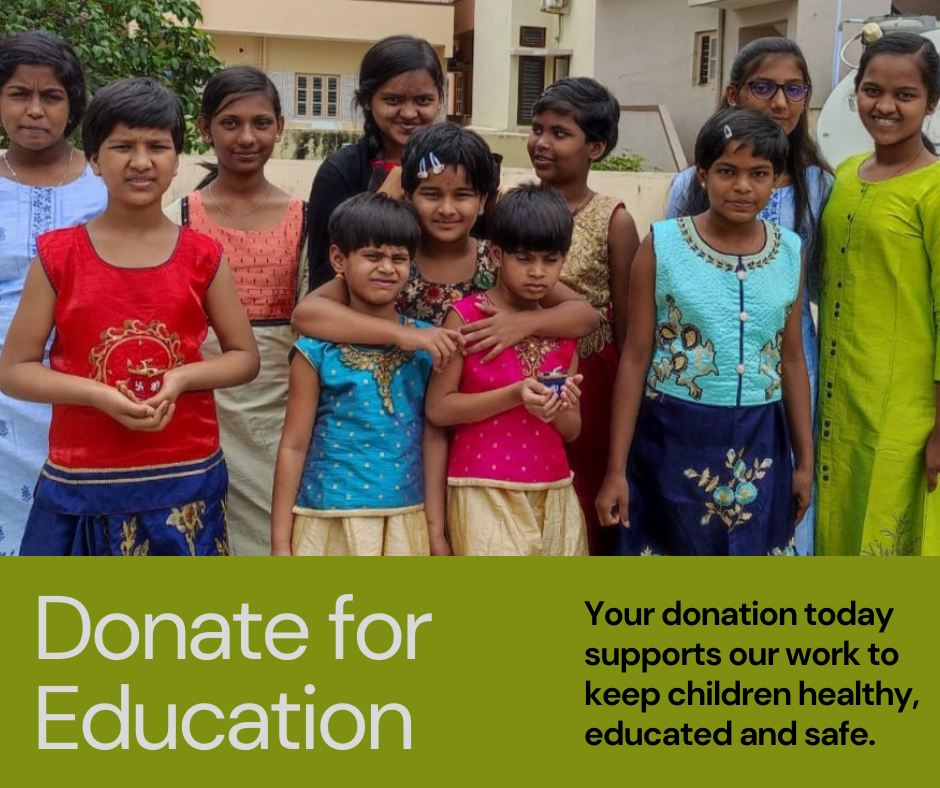
Donate for Education

Together, let’s rewrite the narrative. Every click, every rupee, every hour becomes a seed of hope. Let’s watch these seeds blossom into empowered individuals, shaping a brighter tomorrow.

Visit our website today and take action. Donate, volunteer, and be the change you wish to see in the world. Because in the fight for every child’s future, no act of kindness is too small.

Together, let’s fill classrooms with laughter, backpacks with possibility, and hearts with the unwavering belief that every child deserves a seat at the table of learning.

Remember, countless children await your action. Join us and be the catalyst for change.

Education can change lives of underprivileged children

“Education is a passport to the future.”

Before I delve deep into the importance of education for underprivileged children, let us understand what the term education means. The practice of teaching and learning at educational institutions or environments, or the propagation of society’s values and store of knowledge is known as education. Children need the right kind of education to develop culture and social manners.

Their ultimate role in society is meant to be guided by education, which is aimed at assisting them to acquire a culture, shape and mould their behaviour in the ways of adulthood. It does not necessarily have to have a bunch of students being taught by a teacher on a table and chair with prescribed course books and notebooks. In the most primitive cultures, there is often little formal learning—nothing of what one would typically refer to as school, courses, or teachers. Instead, every activity and every aspect of the environment are usually seen as courses and schools, and most or all adults take on the role of teachers.

Kritagyata Trust

However, as societies become more complex, the amount of knowledge that needs to be passed down to the following generation exceeds what any one person can know, requiring the development of more efficient and selective systems of cultural transmission. This is why a formal setting like a teacher and a classroom with textbooks has become an ideal setting for learning.The progeny of well-off families can acquire good education because of their financial situation, which results in them becoming better global citizens than the financially impoverished ones. They should not be deprived of their right to education only because their parents and guardians are not able to have the funds for it.

Who are the less privileged children? They are those who are not lucky enough to enjoy the basic amenities of life like food, water, shelter and learning facilities as the privileged ones. They stand at the lower steps of the economy; thus, they do not have proper educational provisions like normal students. But that does not mean that they should be blamed for not being able to stand up for themselves and steer through life.As they develop the necessary abilities to support themselves and make wise decisions, every kid should have access to a high-quality education. Compared to someone who did not acquire any formal education, an educated person is better able to deal with challenges and contribute to the development of society.

Children who receive a high-quality education can reach their full potential and become financially independent. In order to achieve social justice and end poverty, education is essential. For poor children to acquire abilities like critical thinking, effective communication, creativity, and imagination, education is crucial.

It is essential for obtaining better-paying jobs, advancing gender equality, and building an inclusive society for the less fortunate. Social problems like child labour, child marriage, and dowry can be eliminated by proper education at the right age. It is an effective method for removing generational poverty. Excellent health, nutrition, and hygiene education can significantly lower deaths that could have been avoided.

Therefore, underprivileged children should be provided with free education. Privilege should not be the requirement for learning, so that they can rise from lower standards and strive for a life of better quality.

Support Kritagyata Trust to help such underprivileged children in bangalore to get access to quality education and food.

Donate online today to support education


Pakhi Sinha

Volunteer

Government school renovation in Bangalore by Kritagyata Trust

Many children who are less previleged donot get access to quailty education, food and shelter. Parents of less preveliged children struggle to earn a meal a day.

So the parents of these children send them to nearby government school to make sure they atlest get access to education. Many government school in and across bangalore are not in a good state.

This is a school in North Bengaluru,Vinayaka Nagara, which has not seen renovation or painting since its start in 2003… We recently built the compound wall for this school and that is when realized it is not only the compound wall it needs more.

To view image visit Kritagyata Image Gallery

Thank you for all the support to fulfill the need.

www.kritagyata.org is our NGO website. Please do donate online to support Kritagyata Trust to help more children across the country.

Don't just leave yet!

All children deserve to live in safe, nurturing homes
where they can feel valued and loved.

Get 50% tax exemption on your donation to Kritagyata under section 80G of the Income Tax Act.